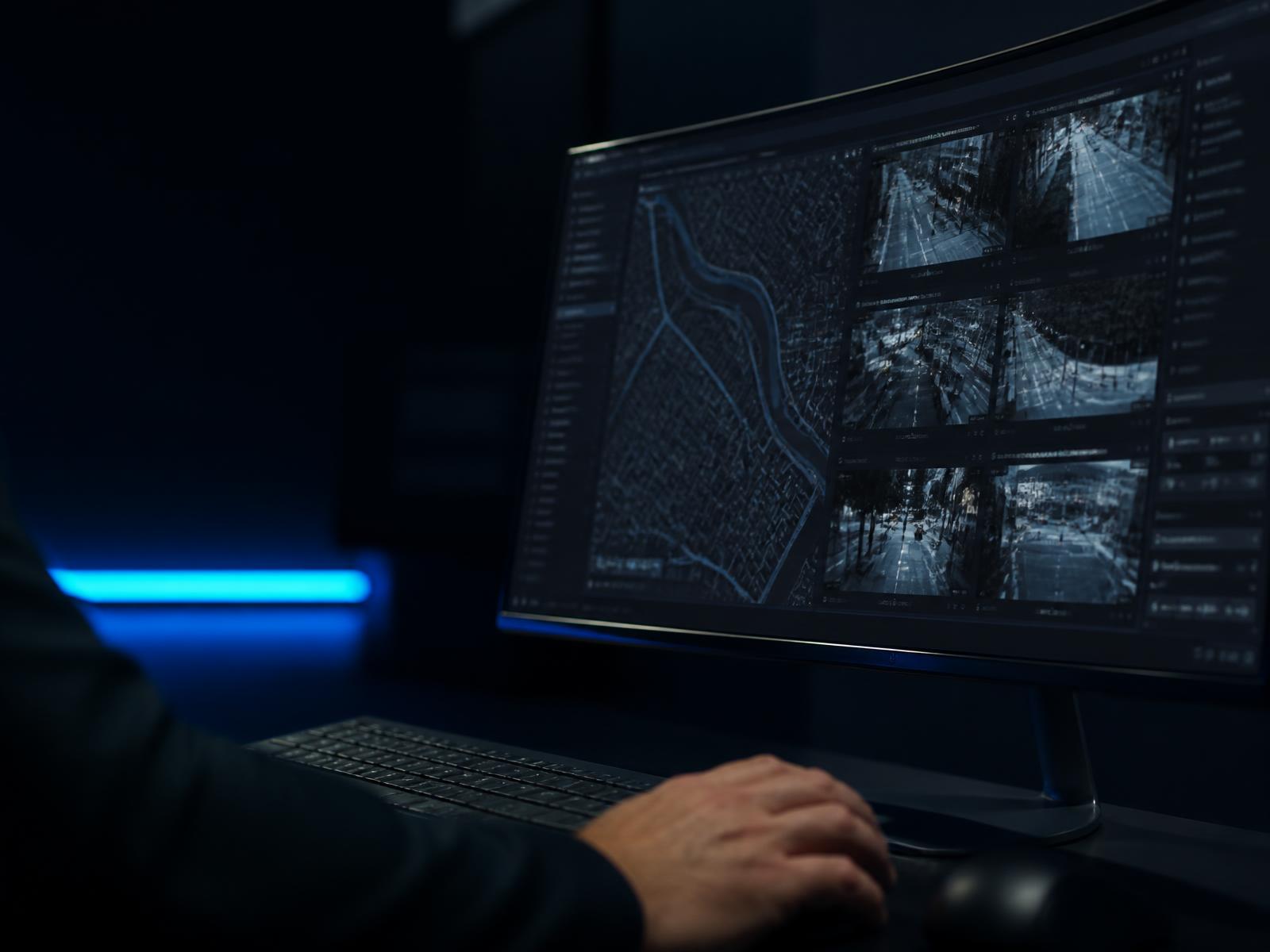
Our Method
A Program, Not a Product Purchase
CounterWatch starts with the property and the desired outcome, then designs, integrates and coordinates the right protection program.
Integrated Architecture
Fixed. Mobile. Aerial. Unified.
Each layer contributes something different. CounterWatch Command brings those sources into a coordinated operating model rather than leaving the customer with disconnected systems and providers.
- Detection from analytics, sensors and alarms
- Observation from fixed, mobile and aerial views
- Human verification before escalation
- Documented procedures and event records
Protection Layers
Fixed
CCTV, thermal, analytics, sensors
Mobile
Trailers, temporary cameras, deployable sensors
Aerial
Drone patrol, verification, thermal, inspection
CounterWatch Command
Remote Monitoring & Protection Operations
- Verify
- Assess
- Communicate
- Escalate
- Document
Protection Lifecycle
Protection Before, During, and After an Incident
The broader lifecycle shapes how the program is assessed and improved. It is distinct from the live workflow used to handle a specific event.
Assess
Prevent
Detect
Verify
Respond
Investigate
Improve
Engagement Model
From Assessment to Continuous Improvement
Site Protection Assessment
Understand the property, current systems, risks, inspection needs, requirements, goals and budget.
Coverage Design
Map what is Observed, Partially Observed and Unobserved, then identify the right capability for each gap.
Program Design
Define technology, delivery partners, procedures, communications, documentation and phased priorities.
Integration
Coordinate approved systems and specialist providers, preserving useful existing investment.
Managed Operations
Connect appropriate monitoring, verification, escalation and reporting under clear responsibilities.
Review and Improvement
Use events, inspection records and changing site conditions to improve coverage and procedure.
Live Event Workflow
See Sooner. Verify Faster. Respond Smarter.
Potential activity becomes useful information through observation, human verification, contextual assessment, coordinated escalation and documentation.
Assess
The event is evaluated against location, timing, movement and the customer's site procedures.
Detect
Analytics, sensors, alarms or scheduled review identify potential activity for attention.
Observe
Fixed, mobile or approved aerial views provide visual context around the activity.
Verify
A trained operator applies human judgment to determine what the available information shows.
Escalate
Notification and response coordination follow the customer's documented workflow.
Document
Relevant imagery, timestamps, observations and actions are recorded for review.
Next Step
Every Program Starts With an Assessment
We will identify what your current systems actually see before recommending anything new.