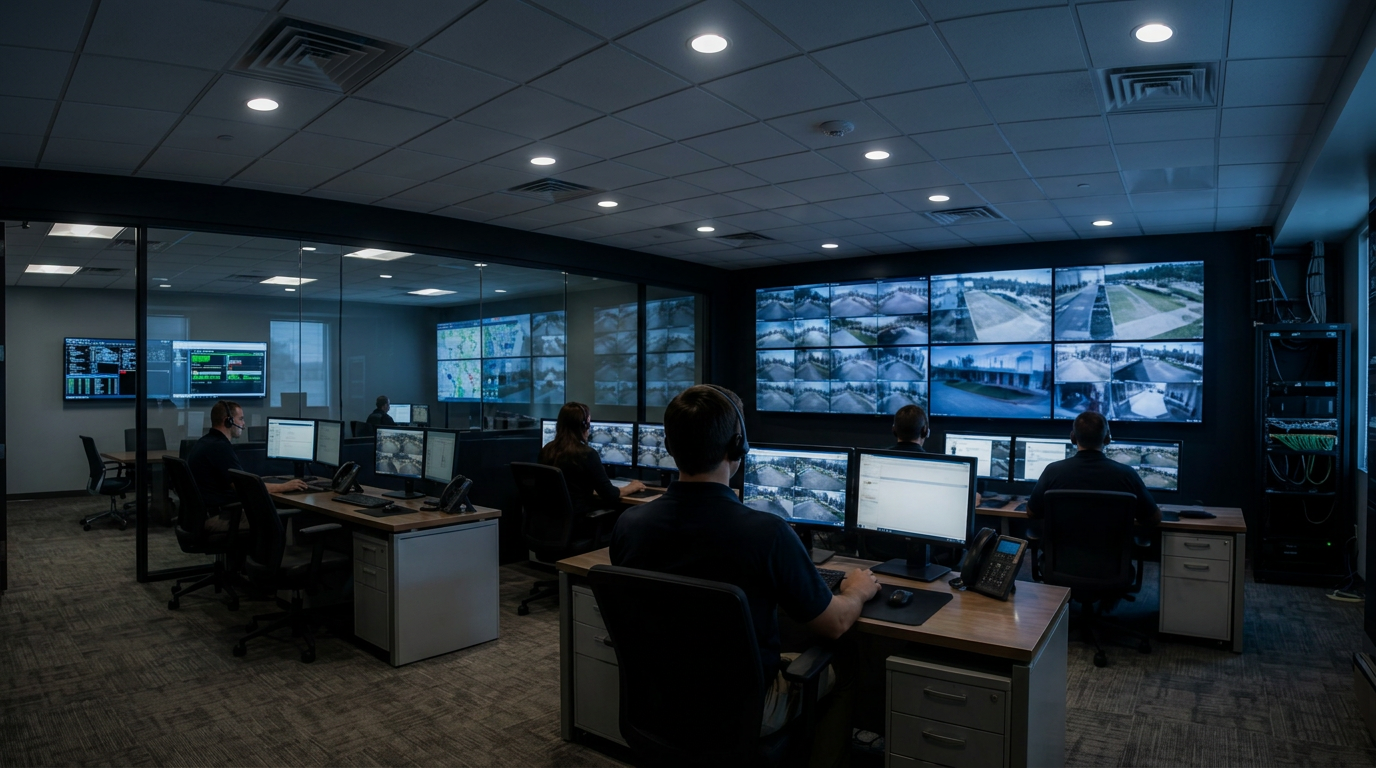
CounterWatch Command
Remote Monitoring & Protection Operations
The operational heart connecting remote video monitoring, people, drones, cameras, trailers, sensors, analytics, alarms, documentation and customer communication.
CounterWatch Command
What This Solution Does
Technology creates visibility. CounterWatch Command turns existing and new camera systems, sensors, alarms and approved aerial capabilities into useful operational awareness through event-driven review, human judgment, verification, escalation and documentation.
One Connected Model
Fixed cameras, mobile units, sensors, analytics, alarms, approved aerial missions and customer communication work through site-specific monitoring workflows.
Multi-Location Consistency
Common procedures, consistent reporting and coordinated technology strategy across sites.
Human Verification First
Analytics and sensors surface potential activity; trained operators apply site context before coordinating notification or escalation.
Capabilities
What This Solution Includes
Remote monitoring
Connected systems can be reviewed through defined schedules and event-driven procedures.
UAS supervision
Approved aerial operations can be coordinated with live site awareness and customer procedures.
AI-assisted detection
Analytics can identify potential activity for human review rather than replacing operator judgment.
Event verification
Operators assess live or recorded information before escalation whenever the configured system allows.
Incident coordination
Site contacts and appropriate response resources are notified according to approved procedures.
Documentation
Relevant observations, timestamps, actions and supporting imagery can be recorded for later review.
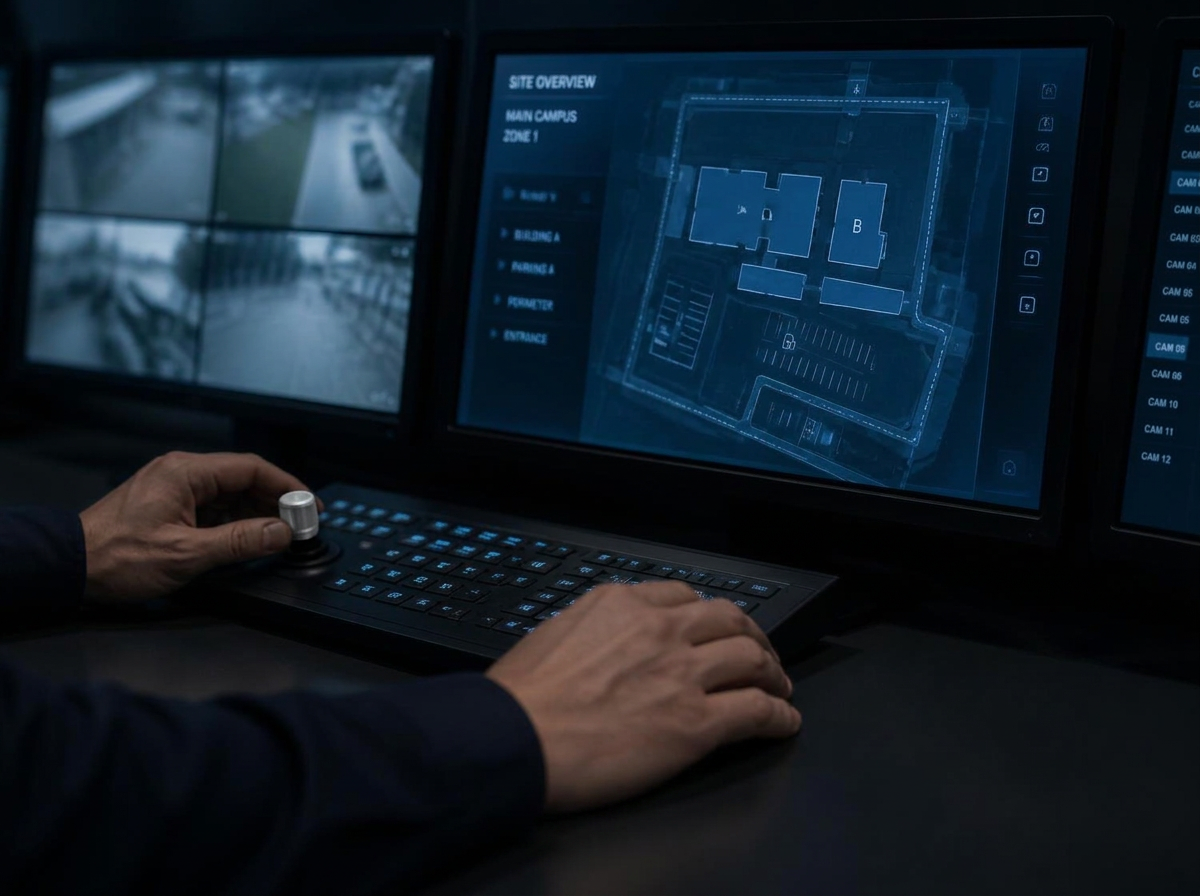
Delivery
How It Is Deployed
Every program follows a defined sequence so the work is predictable, documented and repeatable across sites.
Audit and map systems
Identify cameras, recorders, sensors, mobile units, alarms, aerial capabilities, communication paths and coverage gaps.
Design monitoring procedures
Define review schedules, event thresholds, normal activity, contact trees, escalation rules, retention and reporting requirements.
Integrate managed delivery
Connect compatible systems and selected operating partners into a coordinated monitoring and protection model.
Review and refine
Evaluate event quality, alert volume, reporting, coverage gaps and procedural changes on a recurring basis.
Where It Fits
Environments This Serves
- Multi-site portfolios
- Sites with recorded but lightly reviewed cameras
- Facilities with disconnected systems
- Sites needing verified alerts and immediate response
- Temporary and permanent surveillance programs
- Operations requiring consistent event handling
Outcomes
What Changes
- One point of coordination
- Human judgment applies to alerts
- Consistent procedures across locations
- Documented event and escalation records
OTHER SERVICES
Drone Security & Autonomous Patrol
Managed and coordinated aerial patrol, event verification, thermal observation, situational awareness and incident documentation.
Airspace Awareness & Counter-Drone Protection
Developing detection, identification, tracking and alert coordination for authorized and unauthorized aircraft awareness.
Drone Inspection & Asset Intelligence
Repeatable visual and thermal inspection programs that help protect the assets and infrastructure inside the perimeter.
Fixed Surveillance & Video Intelligence
Assessment, planning and integration for fixed cameras, thermal imaging, analytics, sensors and existing surveillance systems.
Mobile Surveillance & Site Protection
Deployable cameras and sensors for construction, events, parking, equipment yards, temporary sites and supplemental coverage.
Site Protection Assessment
A vendor-neutral review of existing infrastructure, blind spots, risks and opportunities, resulting in a phased protection roadmap.
3D Modeling and Photogrammetry
Aerial photogrammetry, measurable site models and repeatable spatial documentation for planning, progress review and forensic visualization.
Investigations & Forensic Support
A coordinated transition from live protection into incident review, documentation, evidence considerations and specialist forensic support.
Connect Your Operations
Build a More Coordinated Protection Workflow
Tell us about your cameras and connected systems, event volume, coverage concerns, escalation requirements, and the operating consistency you need across sites.